
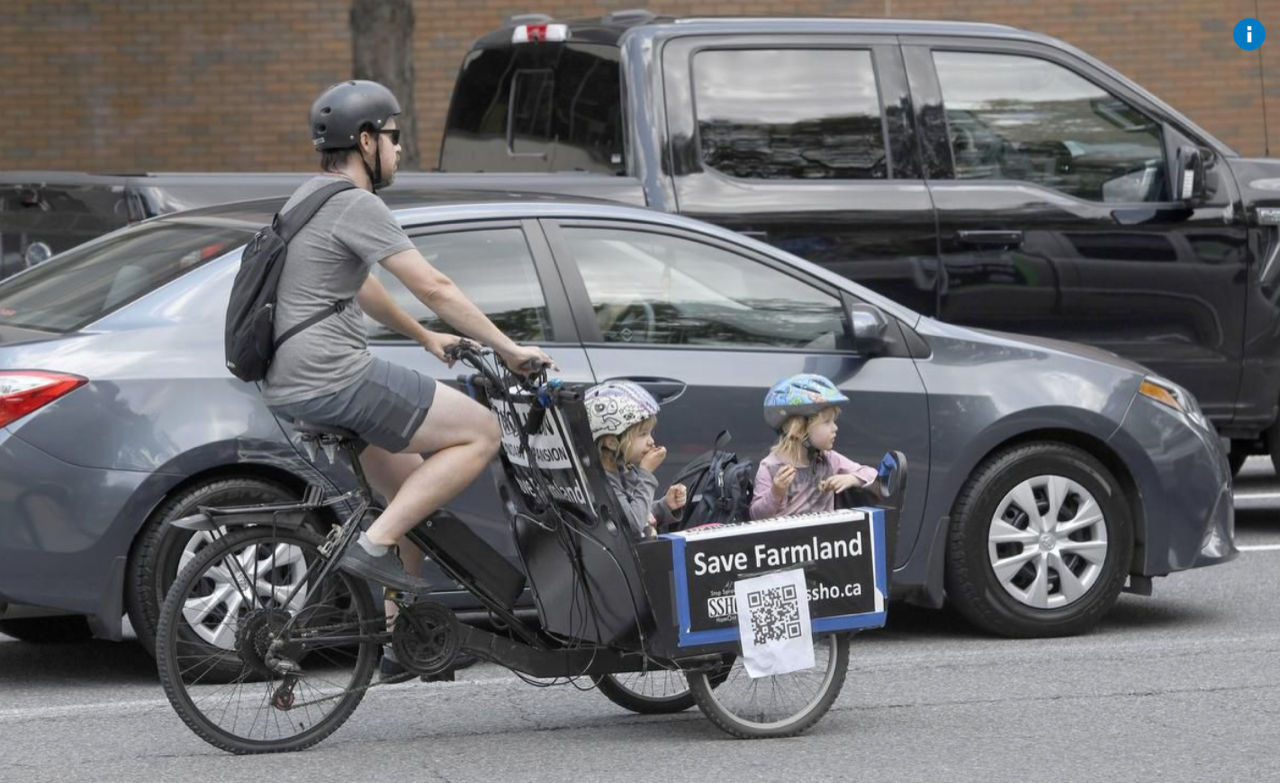
Saving Hamilton’s prime farmland from suburban sprawl
Stay in the loop! Subscribe to our newsletter HERE.
Let’s do housing growth right. Sprawl is not the answer. Hamilton’s $5.2 billion infrastructure funding gapfor roads, sidewalks, bridges, culverts, sewers, water lines, water and sewage treatment facilities, dumps, libraries, rec centres, police / fire stations and services, and everything else the City owns and operates, demonstrates that we cannot pay to maintain the sprawling infrastructure we already have. Hamilton goes further into infrastructure spending deficit by $520 million every year. A large portion of this infrastructure funding gap is due to a backlog of unfunded renewal and maintenance needs which have accumulated over the City’s long history. Building more expensive sprawl on Hamilton’s prime farmland would only cripple future Hamiltonians with even more infrastructure debt and decimate farmland and habitat.
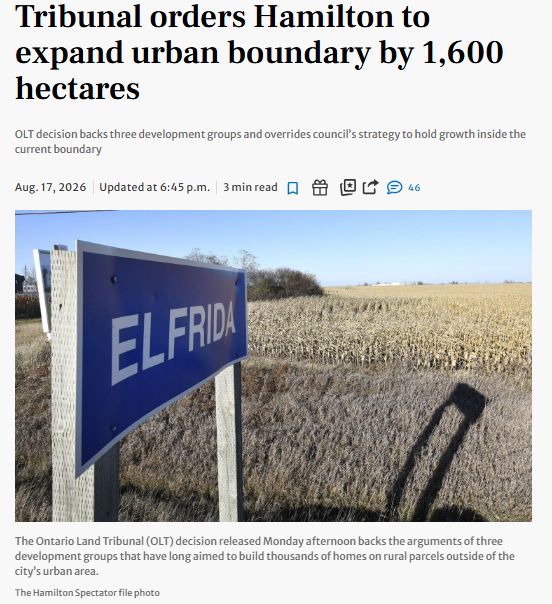
On Monday, Aug 17, 2026 the Ontario Land Tribunal handed down its ruling forcing Hamilton to move ahead with a massive 3953 acre Urban Boundary Expansion (UBE) onto rural farmland owned mostly by land speculators and developers. The ruling means three development consortiums have succeeded in forcing Hamilton to include their rural land holdings, into Hamilton's urban area. The OLT ruling in fact grants a larger expansion than what the developers themselves were asking for.
Brace yourselves for massive, fiscally crippling and environmentally and agriculturally devastating, low density McMansion sprawl on these thousands of acres of prime Hamilton farmland.
To hell with what our own City Planners, City Council and especially the citizens of Hamilton want. This is Provincial Ontario Land Tribunal (OLT) meddling in democracy and local planning, plain and simple. In 2022 the Province forced the expansion of our urban boundary and stole our Greenbelt on the same day, before public outcry forced a backtrack and reversal of those decisions in 2023. Since then, the Province did a work-around and simply changed the Provincial Planning rules:
Previously, municipalities had the power to say yes or no to UBE applications and developers had no OLT appeal rights on those local Council decisions. The Province took that away in 2024 - allowing developers to apply for UBEs whenever and wherever they feel like it (rather than during prescribed periods when growth was considered), and they can now appeal municipal denials on UBEs to the OLT which was not previously allowed, and which rarely go in our favour. Sept, 2022 Hamilton Spectator: Ontario Land Tribunal decisions have favoured developers 97 per cent of the time.
It seems that local councils can vote to approve or deny applications, but the final land use decision-making power has been transferred away from municipalities and placed straight into the arms of hand-picked-by-the Province OLT members and wealthy, connected developers, donors and land speculators.
This forced mega boundary-buster decision is a prime example of that meddling. In case you're new or you've forgotten, a mail-out survey was distributed to all households in Hamilton in the summer of 2021 to ask for opinions about how the City of Hamilton should grow to the year 2051. A record total of 18,387 survey responses were submitted to the City - never before or since have so many people responded to a City survey. The result:
- Option 1 - Expand the urban boundary = 1,088 responses (5.9%)
- Option 2 - No Urban Boundary Expansion = 16,636 responses (90.4 %)
- Option 3 - Other Suggestions = 663 responses (3.6%)
Over 90% of respondents chose NO URBAN BOUNDARY EXPANSION. Council of the time listened and voted 12-3 to stop sprawl and focus housing intensification inside existing neighbourhoods, close to jobs, transit and amenities. After 2022, the new term of Council continued voting against sprawl and voting for zoning changes that would allow for more intensification city-wide, and the plan was working - Hamilton has achieved an average of 80% intensification over the last few years, even though urban expansion developers claimed that level was "aspirational" and that even 50% (low density) would be hard to achieve. But with the no urban expansion policy change, Hamilton did achieve an average of 80% intensification and in 2023, eclipsed that goal and reached 90%. (Page 4 here). Unfortunately for Hamiltonians the OLT was persuaded by the developers' lawyers and ruled that "The Tribunal finds....that the City’s 80% intensification rate is aspirational and is not reasonable or attainable as required by the PPS 2024." A ruling copied straight from the arguments of the developers.
The Provincial government has overridden local democracy again and again and this OLT decision is the pinnacle of it all. The Province controls Land Use and Planning decisions in Hamilton, not us.
2026 - The current risk to Hamilton’s Firm Urban Boundary
As a result of Provincial Changes that help developers, there are now six Urban Boundary Expansion (UBE OLT) appeals active in Hamilton, threatening to pave well over 5000 acres of prime farmland .
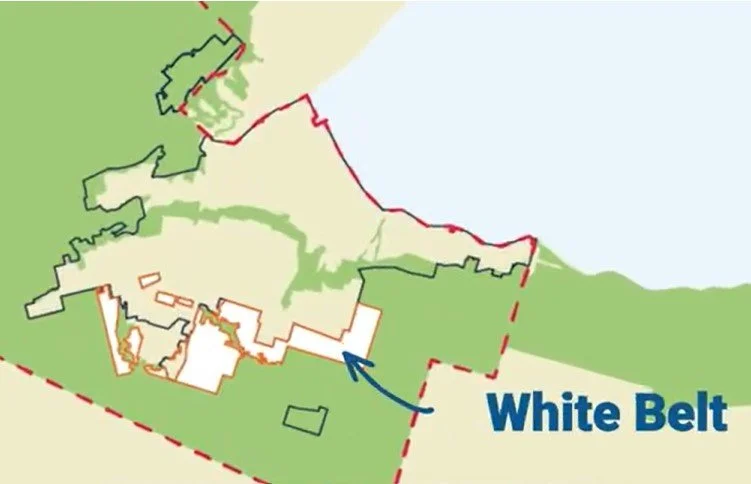
UBE applications can now be submitted anytime and anywhere on Hamilton’s White Belt - 9800 acres of farmland between the built up city and the Greenbelt. Learn more here.
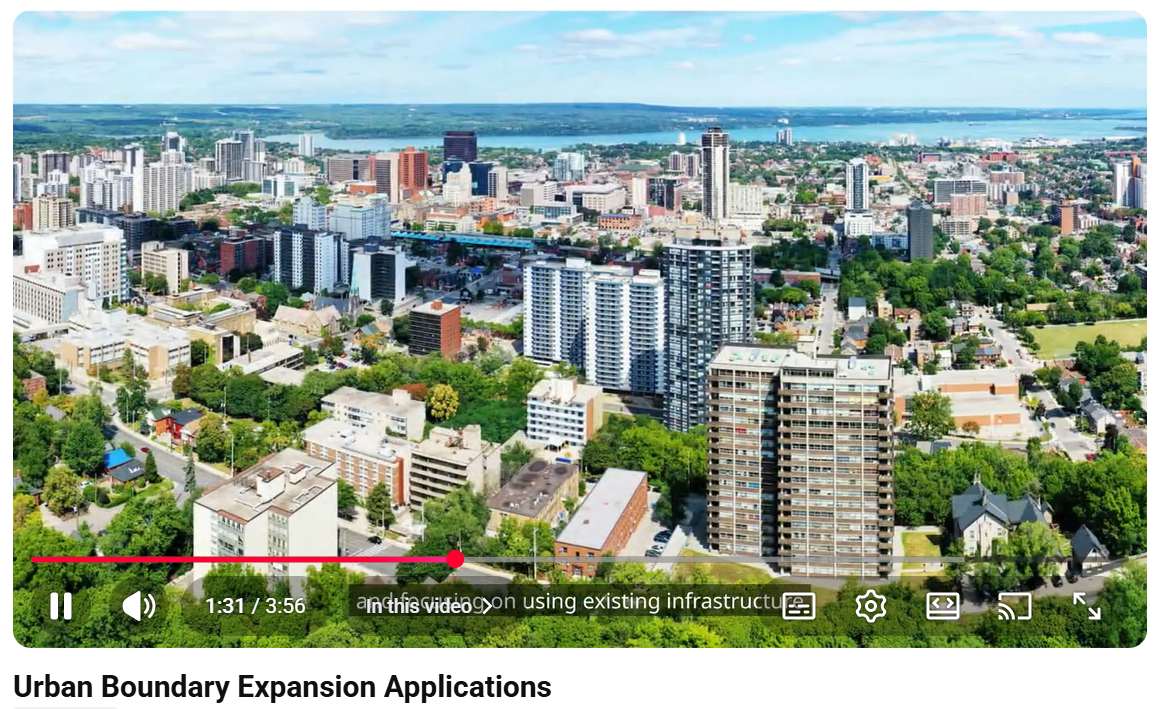
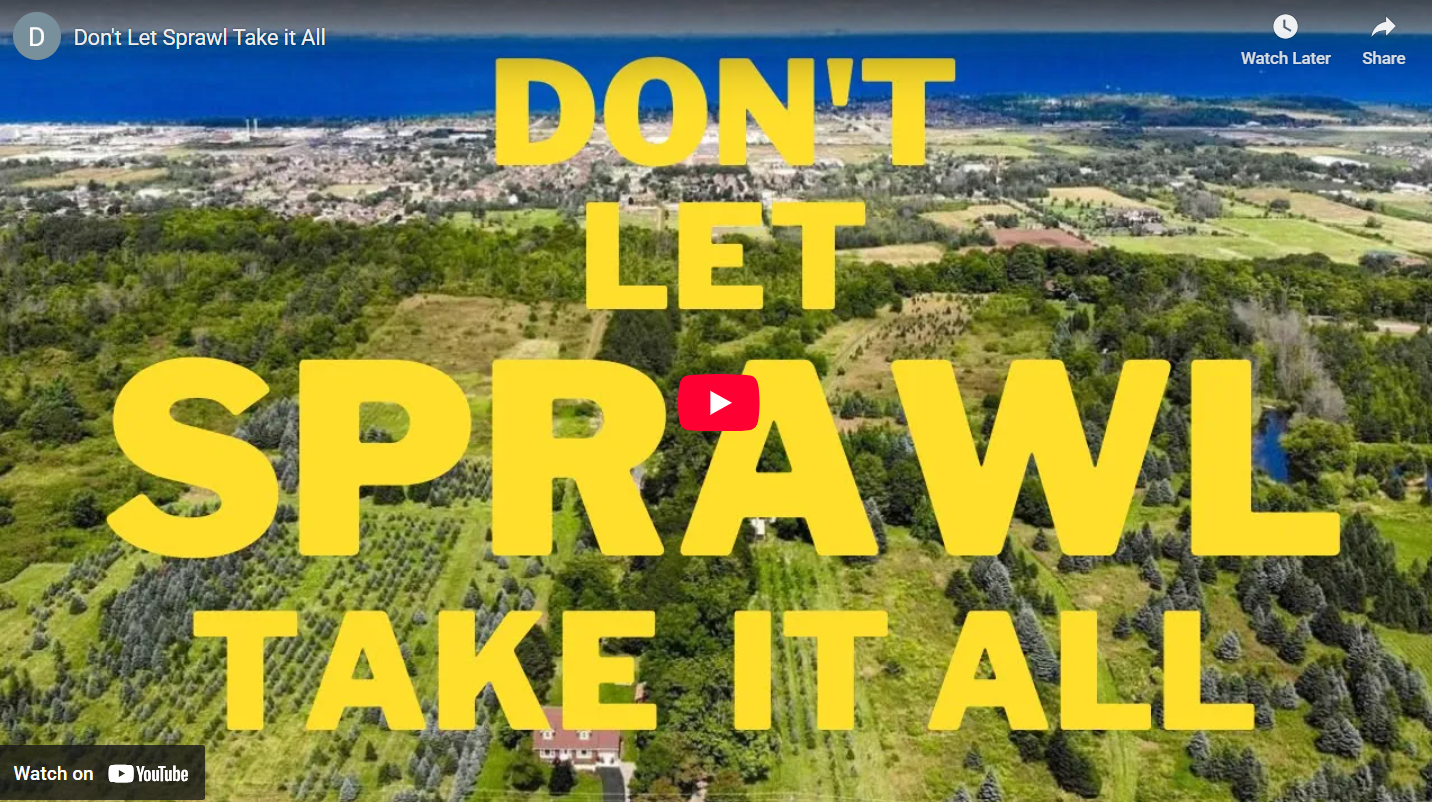
For a deeper dive on each of these contested expansion areas click “farmland to save” in the dropdown above and watch the quick but super helpful explainer video.
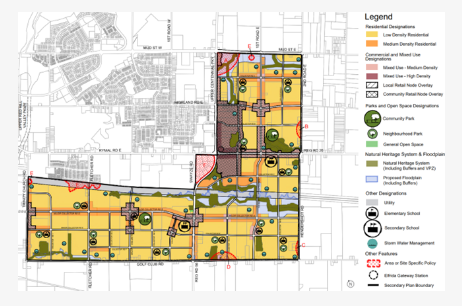
Submit your comments AGAINST the 3000 acre Elfrida Secondary Plan application! Your comments to Planning Staff are crucial to help them make a recommendation to Council to either approve or deny this massive sprawl application at the upcoming August 25, 2026 Council meeting.
Please click: ssho/elfrida for instructions
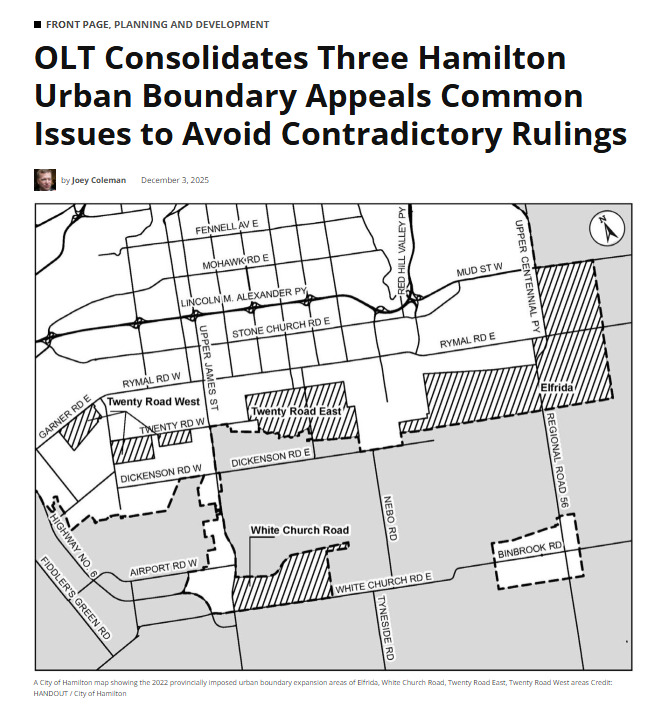
Jan 2026 update:
There are now five UBE appeals at the OLT. Three of them, Elfrida, Twenty Road West and White Church have common issues and the City’s request to combine those issues into one hearing for all three landowner groups has been granted by the OLT. That consolidated hearing will take place over two weeks in April 2026.
Everyone is encouraged to tune in and watch the hearing. Your camera and mic will be off, but your presence shows the OLT that Hamilton is watching. The link to the GoTo meeting (similar to a zoom meeting) is below. You can download the GoTo app or watch in your web browser.
Monday, April 13, 2026 - May 1, 2026.
Join the video event:
https://meet.goto.com/558205565
Access code: 558-205-565
Issue 1: Which population forecasts and methodology should be applied to the proposed urban boundary expansions, in accordance with Sections 2.1.1 and 2.1.2 of the Provincial Planning Statement, 2024?
Issue 2: Is an urban expansion(s) warranted for the City of Hamilton to accommodate an appropriate range and mix of land uses to meet projected needs as per Sections 2.1.3 and 2.1.4 of the Provincial Planning Statement, 2024?
Issue 3: Is there a need for additional urban land to accommodate an appropriate range and mix of land uses as per Section 2.3.2.1a) of the Provincial Planning Statement, 2024?
Issue 4: Will the proposed urban boundary expansion(s) impact the City of Hamilton’s ability to meets its residential intensification and redevelopment targets, including the intensification distribution policies set out in Sections A.2.3 and B.2.4.1 of the Urban Hamilton Official Plan?
Issue 5: Will the proposed urban boundary expansion(s) result in intensification targets not being achieved within the current approved boundary, resulting in under-utilization of existing and planned infrastructure? For example, will the urban boundary expansion impact the City of Hamilton’s goals to meet provincial density targets in the Major Transit Station Areas?
Some history. Hamiltonians say YES to a firm urban boundary and NO to sprawl!
In 2021 the City of Hamilton conducted a survey of its residents asking: should the city should sprawl onto prime farmland by 3300 acres or keep a firm urban boundary and add more density in the city? Over 16,000 people emailed City Hall expressing their choice for “No Urban Boundary Expansion”. A firm urban boundary is NOT anti-housing. It IS against McMansions in the wrong place, on our prime farmland, wetlands and forests. It IS pro-housing, inside the urban boundary, in existing neighbourhoods, close to jobs and amenities. Below are the results of the City Survey.
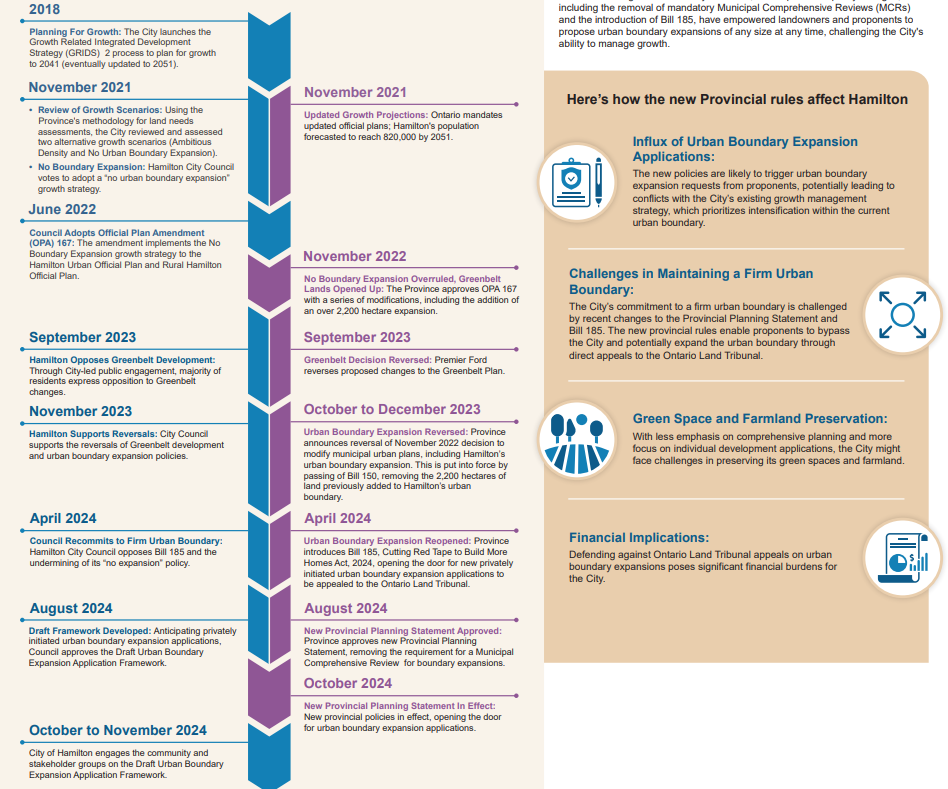
November 2021 - 16,636 Hamiltonians respond to a city-wide survey in favour of “No Urban Boundary Expansion”. Council votes to hold Hamilton’s urban boundary firm and not expand onto precious White Belt farmland which means that not only is our Greenbelt safe, but 5436 acres of prime White Belt farmland sandwiched between the Greenbelt and the built-up city boundary is also safe from development.
November 2022 - the Province under Premier Ford overrules Hamilton’s decision and forces the full expansion of our urban boundary onto every acre of White Belt land, while at the same time removing 1964 acres of Hamilton farmland from the Greenbelt, all on the same day.
September to December 2023 - the Province does a massive flip-flop, reversing its decisions and restoring Hamilton’s firm urban boundary and our Greenbelt lands. But the win is short lived.
February 2024 - White Church Landowners appeal Secondary Plan to OLT.
April 2024 - the Province introduces Bill 185, Cutting Red Tape to Build More Homes Act, 2024, undermining Hamilton’s “no expansion” policy and opening the door for new privately initiated urban boundary expansion applications to be submitted at any time, for anywhere and permitting developers to appeal the City’s refusal to the Ontario Land Tribunal, none of which were possible previously.
June 2024 - Twenty Road West developers (Upper West Side Landowners Group) appeal 219 acre UBE application to the OLT.
2024(?) - Twenty Road West developers (Upper West Side Landowners Group) appeal UBE 700 acre Secondary plan application to the OLT.
October 2024 - land speculator-driven urban boundary expansion applications begin flooding in to the Planning Department and the City seeks public feedback on how best to assess the applications because it is not permitted to simply refuse them.
December 2024 - Twenty Road West developers (Upper West Side Landowners Group) requested the City's support of a proposed Minister's Zoning Order to expand the boundary. Request denied by Council.
June 2025 - City approves the Draft Framework for Processing & Evaluating Urban Boundary Expansion Applications. Find it here.
June 2025 - City Council denies Elfrida landowners’ 2987acre UBE application. Developers appeal to the OLT.
June 2025 - City Council denies Whitechurch Landowners’ 900 acre UBE application. Developers appeal to OLT.
September 2025 - City Council denies an UBE application onto Hamilton Greenbelt at 159-163 Sulphur Springs Road. Developers appeal to the OLT. City moves to dismiss the appeal as Greenbelt development refusals are not permitted to be appealed to the OLT.
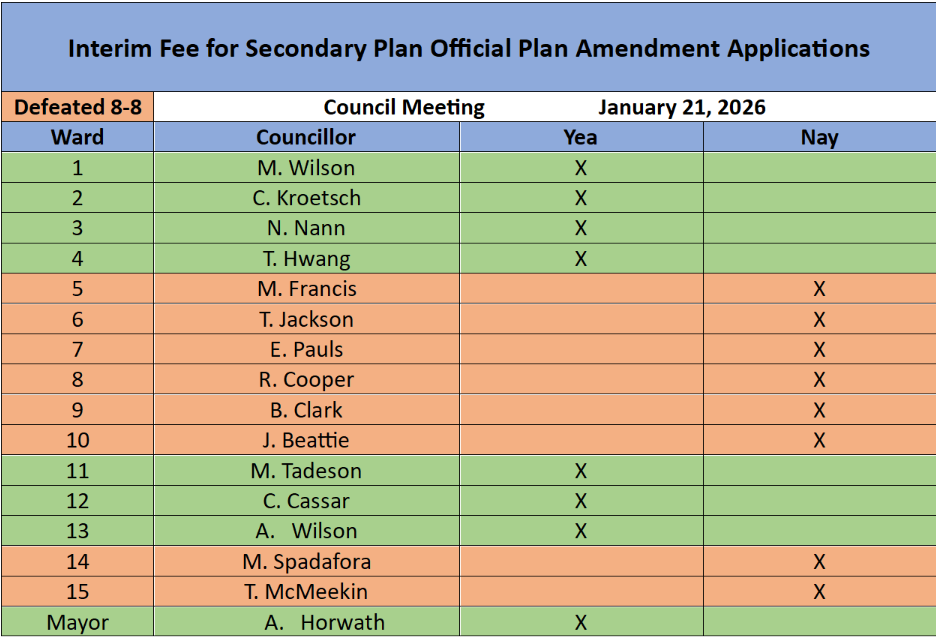
January 2026 - City Council vote on Staff report Establishing an Interim Fee for Secondary Plan Official Plan Amendments Applications. The intent was to increase the fee for large secondary plan applications in the urban expansion areas so they are based on a cost-recovery model that accurately reflects the substantial staff resources and time it takes to assess such applications. The recommendation failed on a tie at Council meaning those extra fees will be paid by taxpayers, not developers. Minutes of the Council meeting here (page 7). See vote count graphic.
April 2026 - Consolidated OLT online hearing for Elfrida, White Church, Twenty Road West UBE appeals against the City’s refusal. Two week hearing scheduled.
Hamilton’s Urban Boundary Timeline - click to expand


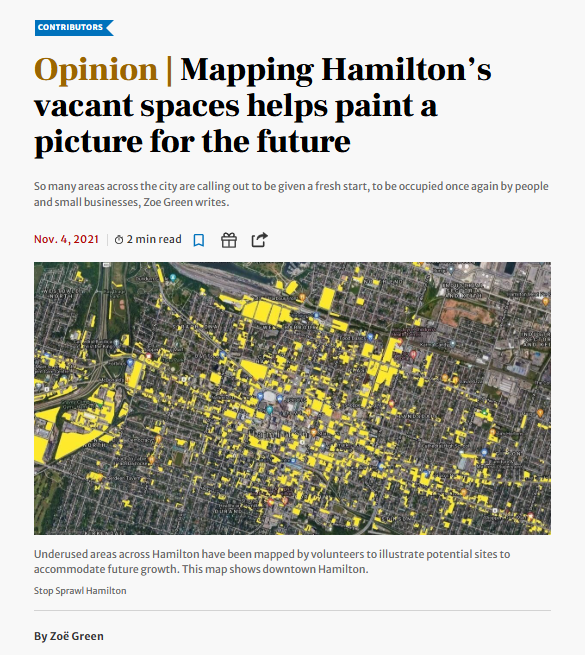
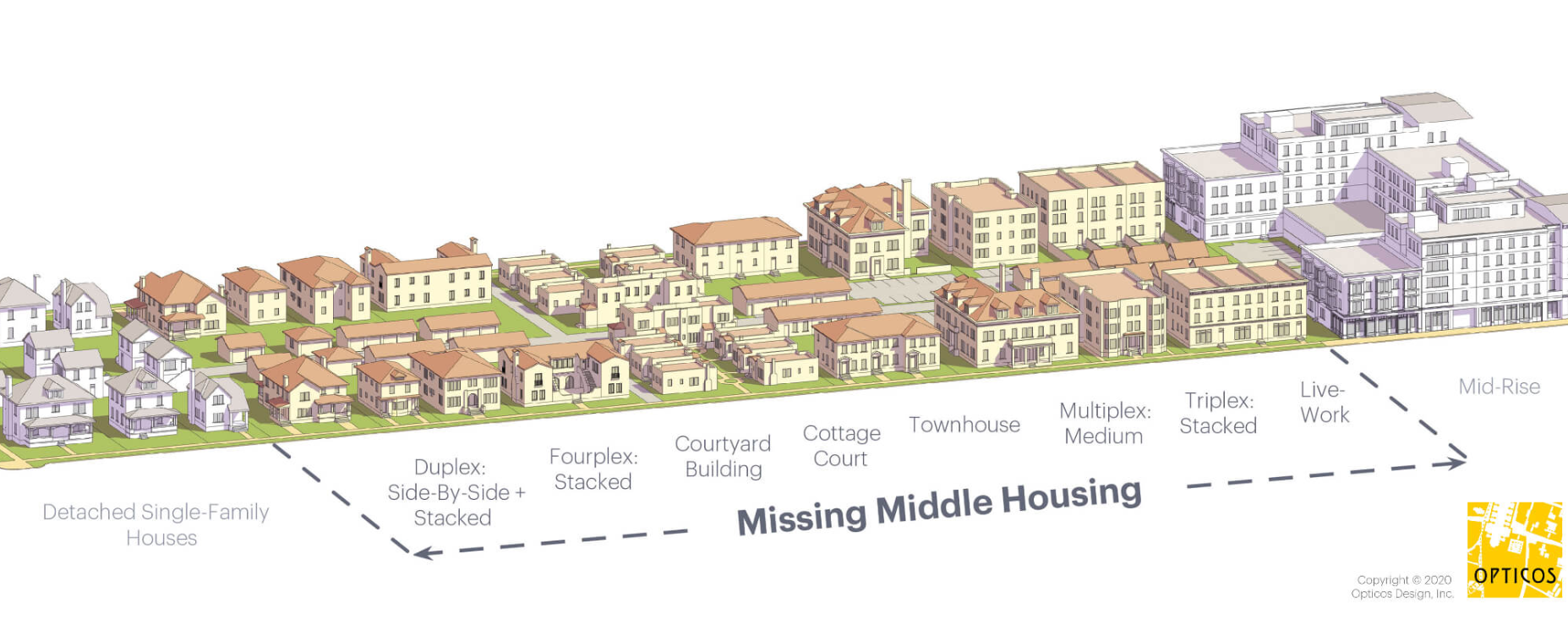
We can grow within our urban boundary.
Hamilton is a growing city with booming education, healthcare and tech sectors, plus a dynamic arts and culture scene. Now’s the time to build within the existing city. Investing within our current urban boundary preserves surrounding farmland, lowers greenhouse gas emissions, and ensures our tax dollars are used to maintain existing infrastructure. By building on under-utilized land within the city limits, we can create more affordable, walkable, bikeable and less car-dependent neighbourhoods. This promotes healthier, more active lifestyles. Developing within our existing city limits supports small, local businesses, vibrant neighbourhoods and healthier citizens – for today and decades to come.

We must preserve vital farmland.
Local growing regions are crucial to our food security. Only 7.3% of Canada is farmable land, and most of that prime agricultural land is located right here in Southern Ontario. And yet, 175 acres of Ontario farmland are lost every day to urban development. When will it stop? The City of Hamilton previously proposed rezoning 3,300 acres of prime agricultural land for sprawling, car-dependent, residential subdivisions. But residents said no! Council agreed and we’re on a path to preserving farmland and creating great neighbourhoods. What would have been at stake: family farms, agricultural employment, local food security, as well as farmland-adjacent watersheds, wildlife habitat, conservation areas and public recreation spaces.
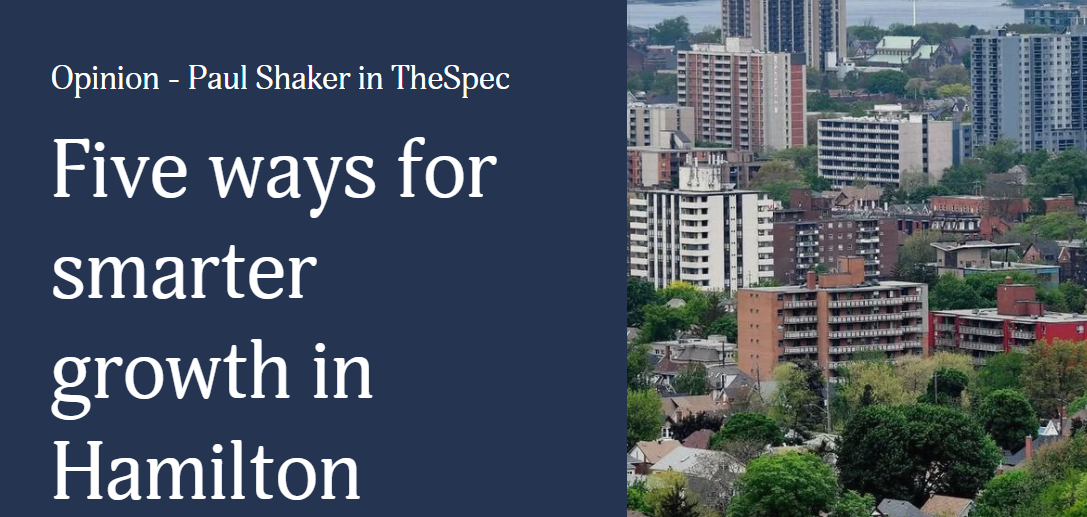

Opinion - Paul Shaker in TheSpec
Five ways for smarter growth in Hamilton

Five ways for smarter growth in Hamilton by Paul Shaker.
